
The Journey
“For the First time, The women of the Bible weren’t unreachable. they were human. And seeing that is what helped me see myself in God’s story.”
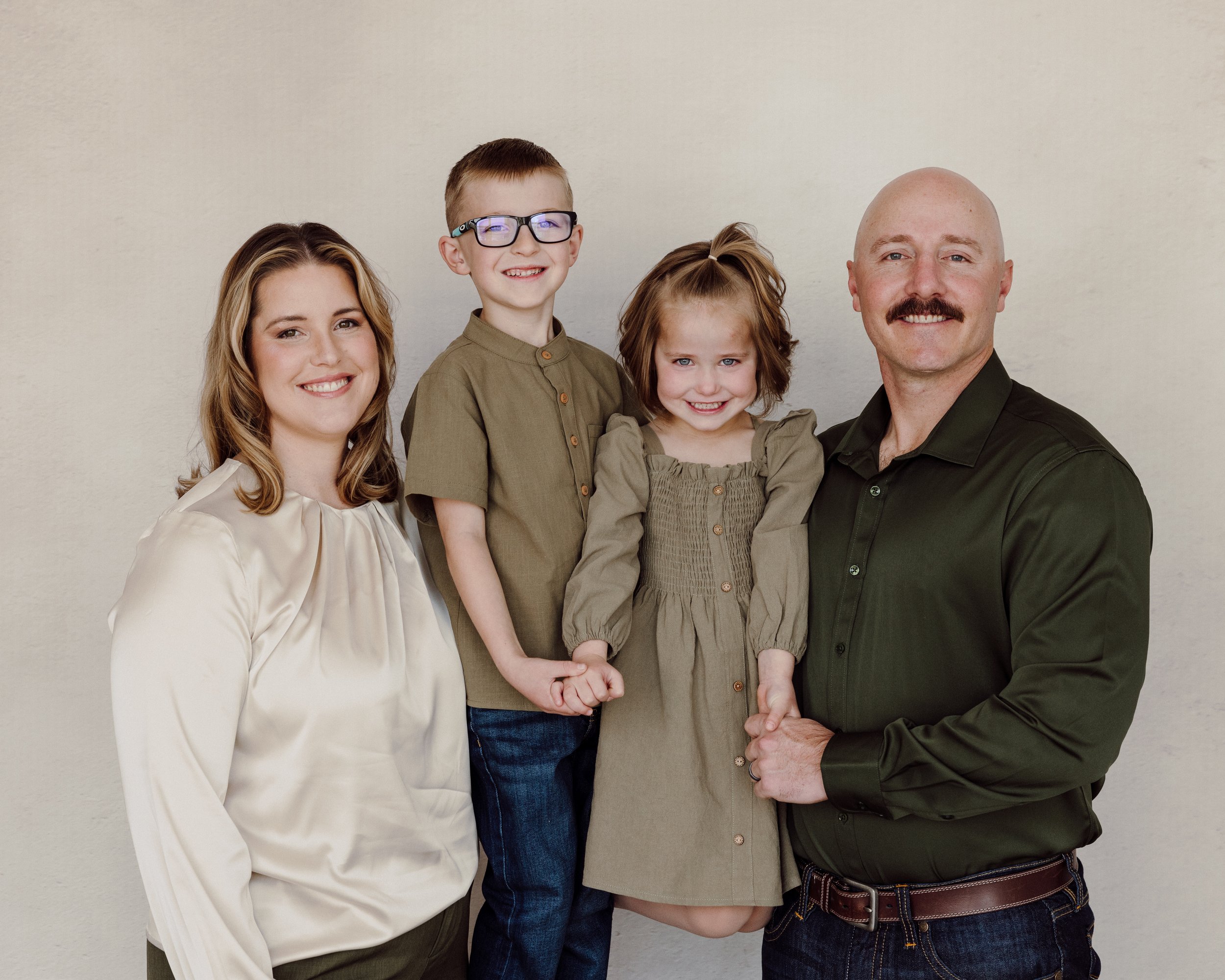
Hi, I’m Jackie, and I’m so glad you’re here.
I have always believed in God, but for much of my life, I didn’t truly understand how faith was meant to be lived, especially as a strong, professional woman navigating marriage and motherhood.
I grew up attending church regularly with my aunt, who faithfully brought me along each Sunday. My parents supported my faith, but God was not something we talked about openly or practiced together at home. As a result, my relationship with Him felt real, yet incomplete and not fully integrated into my everyday life.
At nineteen, I lost my stepfather to lung cancer. That loss deeply shook my trust in God. While my belief never disappeared, I quietly carried the sense that suffering was a form of punishment. A belief that lingered far longer than I realized.
When I met my husband, shared faith mattered deeply to both of us. We believed in God, but church attendance was inconsistent. Over the next several years, we experienced repeated pregnancy loss that were emotionally isolating in ways few people talk about. Fertility conversations often focus on getting pregnant; our struggle was staying pregnant. The grief was quiet, cumulative, and deeply personal.
When I was finally pregnant with our son, we committed to finding a church, not out of obligation, but conviction. That decision led us to a community where, for the first time, I saw professional excellence and faith existing side by side. The pastor approached ministry with strategic clarity, and his wife was a successful professional woman whose life outside the church was neither hidden nor diminished. It was the first time I truly saw myself reflected in faith leadership.
After our son was born, financial realities required that I return to work. I remember standing in our kitchen, telling my husband that I wanted to go back, hoping that if I said it confidently enough, it would be true. We had always discussed more traditional roles, and I didn’t want him to feel he had failed. So he adjusted. He stepped back so I could step forward.
By the time our daughter was born, my career had accelerated. Promotions came quickly. So did resentment. I had absorbed the cultural message that success was proof of strength and quietly blamed my husband for the cost of it.
It wasn’t until after our final miscarriage, and during a particularly difficult season under new leadership at work, that everything began to shift. I found myself frustrated by command-and-control dynamics, especially from female leaders whose styles felt oppressive rather than empowering. A counselor encouraged me to focus on what I could control: myself. That advice irritated me… until I walked into a local Christian bookstore and picked up a book titled Control Girl.
I bought it because of work.
It changed me because of home.
For the first time, I saw how the very traits that made me effective professionally — decisiveness, drive, leadership — had quietly become burdensome in my marriage. The book’s exploration of biblical women, particularly Sarah, finally told the whole story. Not the polished version often taught, but the messy, human one. A woman who tried to take control. A woman who doubted. A woman God still used powerfully.
That realization changed everything.
Since then, God has continued to reorder my life in unexpected ways. We moved states. I stepped away from my career temporarily. I was given the gift of time. Time with my children, time to tend to my home, and time to deepen my relationship with Him. In that quiet space, I began to see the through-line clearly: my professional skills were never meant to be discarded at home, only applied differently. Work and home were never separate worlds, they were always speaking to one another.
Career & Home Journey exists because I now know this to be true:
God is calling professional women back into confidence… not just in their leadership, but in their faith, their homes, and their marriages. When women understand how to live out their faith practically and relationally, they become powerful anchors for their families and quiet leaders in bringing hearts back to God in every room they enter.